What Is the Total Production Cost to Print One Custom Dark T-Shirt?
04 Sep
0 Comments509 Views
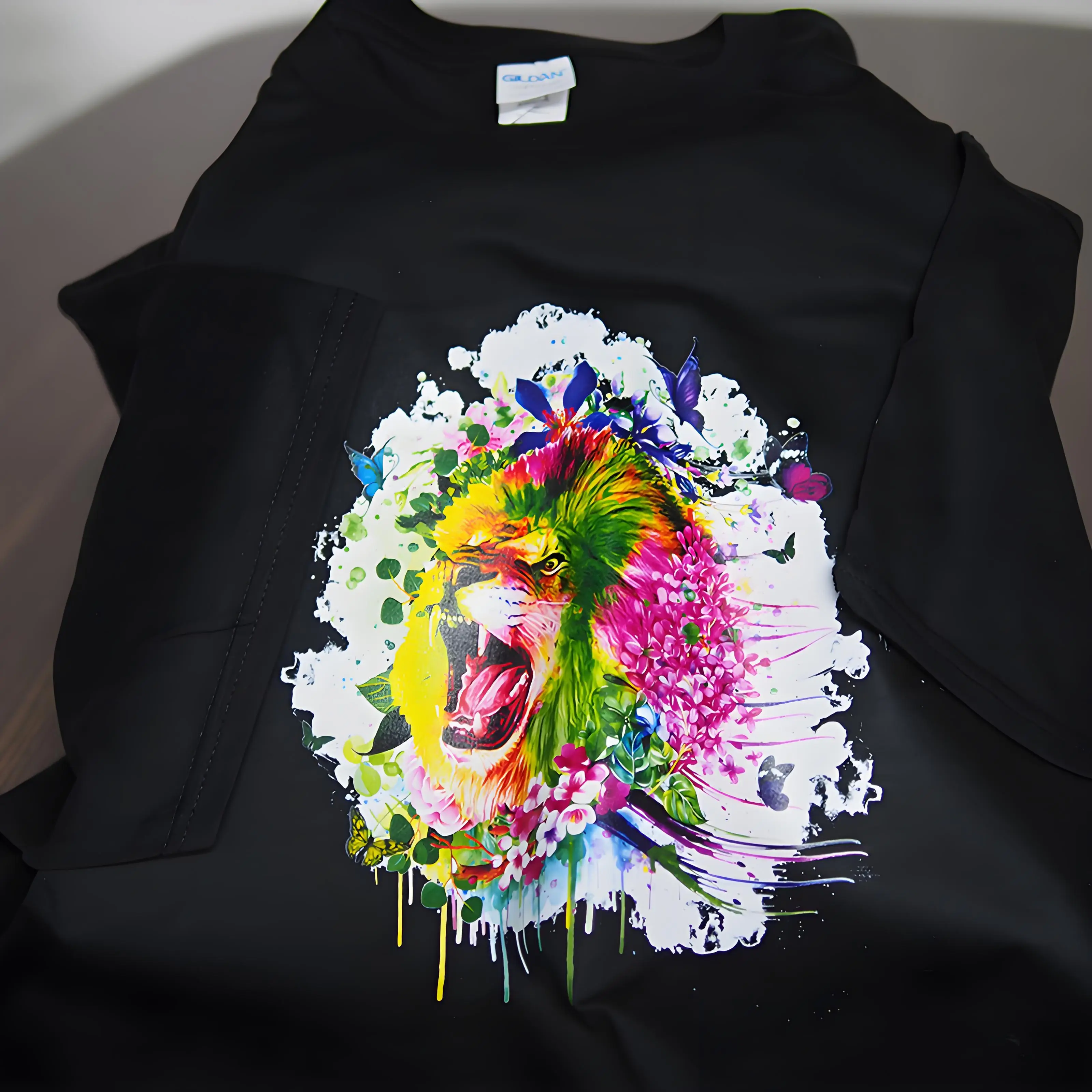
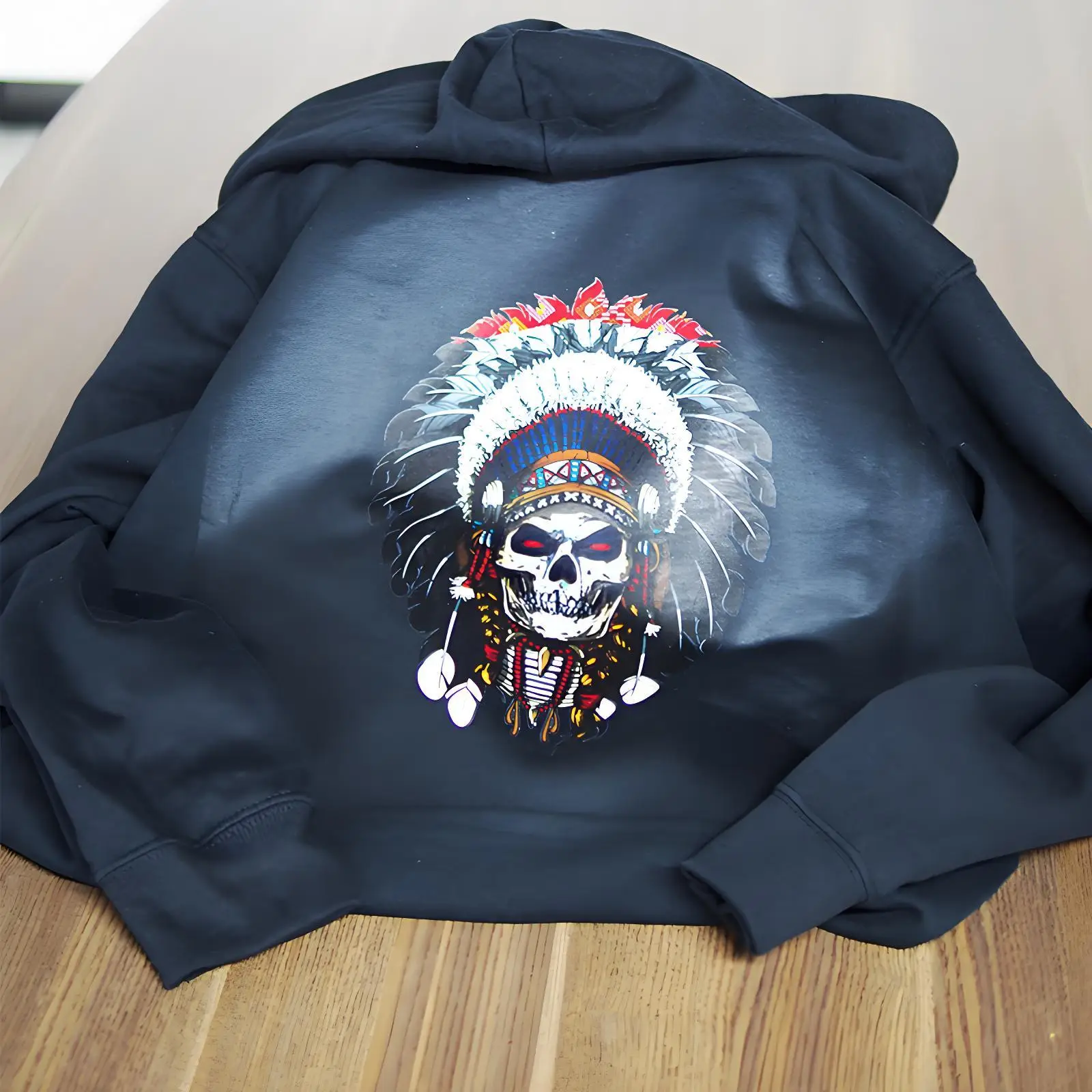
When calculating the total production cost to print one custom dark t-shirt using DTG (Direct-to-Garment) technology, most new business owners are surprised by how many individual cost components add up. Unlike printing on white shirts — which only requires CMYK ink — dark garments require a white ink underbase layer, a pretreatment chemical application step, and extended heat press curing. In this complete cost breakdown guide, we walk through every single expense: the blank garment cost, white ink and CMYK ink consumption, pretreatment liquid cost, electricity and machine wear allocation, plus hidden consumable costs like wiper blades and cleaning fluid. Real-world figures from active production shops show that the all-in COGS for a quality dark custom t-shirt using a professional A3 DTG printer ranges from $5.00 to $7.60 per piece, which supports a retail price of $22–$32 for healthy 65–75% gross margins. Learn the exact formula to calculate your cost, discover how to reduce per-shirt expenses by 30–40%, and find out when DTG is more cost-effective than DTF or screen printing for small batch dark garment orders.
DTG PrintingCost & PricingSmall Business Guide
What Is the Total Production Cost to Print One Custom Dark T-Shirt?
Reading Time: 10 Mins
Written by: GNFEI Production Engineering Team
Updated: September 2026
If you are planning to start a custom t-shirt printing business or expand your current print shop with a DTG printer, one of the very first questions you need to answer is: exactly how much does it cost to produce one dark shirt from start to finish?
This is not a simple single-number answer. Unlike white garments where you only need CMYK ink, dark shirts require a mandatory white ink underbase layer, a chemical pretreatment step, and extended heat press curing — all of which add significant cost that many beginners overlook when planning their business economics.
In this guide, we break down every component of the production cost with real-world figures from active print shops, show you how to calculate your exact unit economics, and explain how to reduce per-shirt costs by 30–40% once your operation scales up.
Complete Cost Breakdown: One Custom Dark T-Shirt
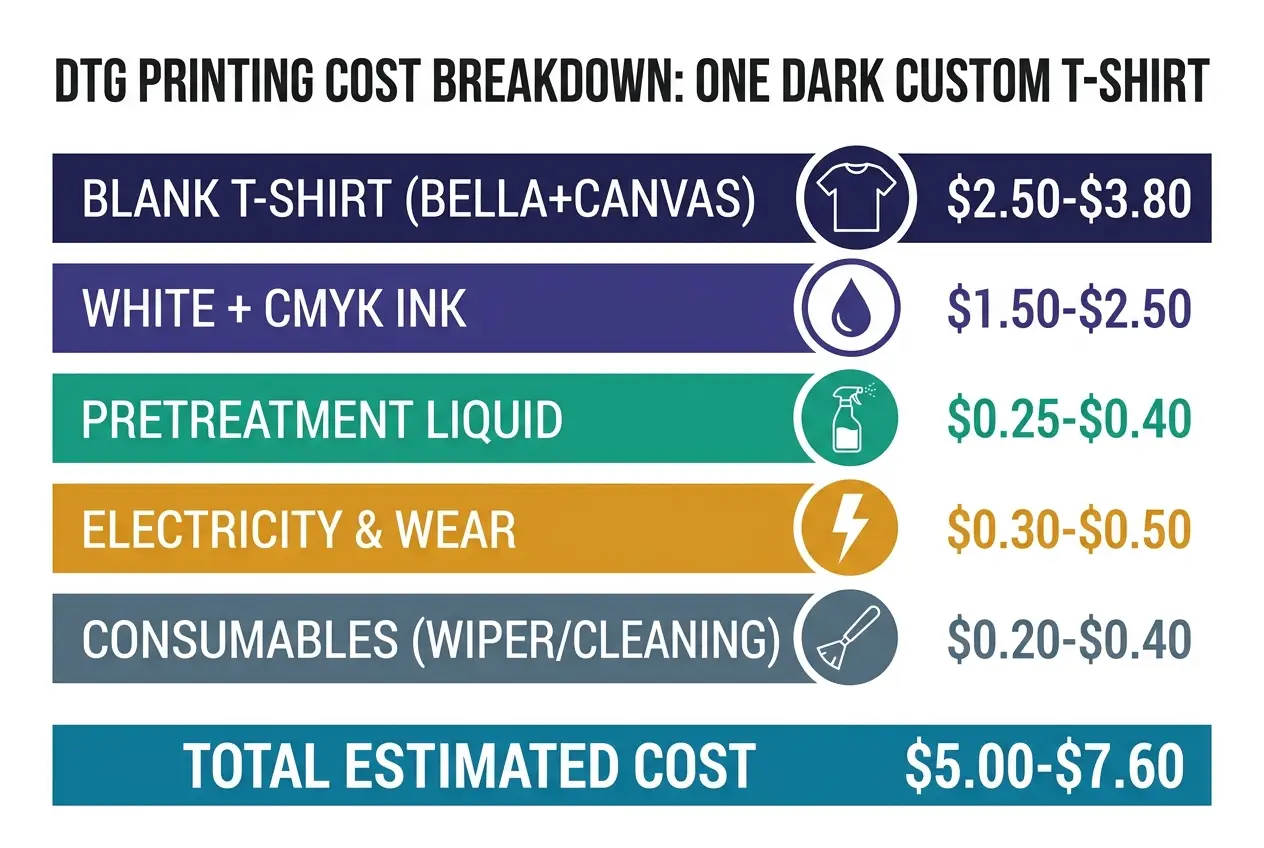
Here is the full production cost breakdown for a standard adult dark-color t-shirt with a full-front graphic (approximately 12×14 inches) printed on a professional A3 DTG printer:
👕
Blank T-Shirt
$2.50–$3.80
Premium 100% combed ringspun cotton (Bella+Canvas 3001, Next Level 3600, AS Colour). Lower-grade blanks reduce cost but compromise print quality.
🖨️
White + CMYK Ink
$1.50–$2.50
White underbase ($1.00–$1.80) + CMYK color pass ($0.50–$0.90). White ink is the largest single ink cost due to titanium dioxide pigment density.
💧
Pretreatment Liquid
$0.25–$0.40
18–22g per adult shirt applied via auto-pretreatment machine or calibrated HVLP sprayer. Mandatory for dark garment adhesion and wash durability.
⚡
Electricity & Machine Wear
$0.30–$0.50
Allocated cost of printer electricity (2–5W per print), heat press power (1,800W per cycle), and proportional machine depreciation spread across daily output.
🔧
Consumables & Maintenance
$0.20–$0.40
Allocated cost of wiper blades, capping stations, daily cleaning fluid, waste ink pads, and parchment paper spread per printed shirt.
💰 Total All-In Production Cost (COGS)
Per dark custom t-shirt · Full-front 12×14" graphic · Professional A3 DTG printer
$5.00 – $7.60
💡 Pricing Strategy Insight
With a production COGS of $5.00–$7.60, most active small print shops successfully price single on-demand dark shirts at $22–$32 each, achieving a gross margin of 65–75%. For batch orders of 6–24 shirts (events, local businesses), a price of $17–$22 per shirt remains profitable while staying competitive against screen printing.
Why Dark Shirts Cost So Much More Than White Shirts
The core reason dark garments are more expensive to print is the mandatory white ink underbase layer. CMYK inks used in DTG printing are semi-translucent. On white fabric, they penetrate cotton fibers and reflect natural light, producing vibrant colors. On black or dark garments, the same translucent inks become invisible — absorbed into the dark fabric with zero color payoff.
The solution is to first jet an opaque white ink layer that acts as a solid primer canvas. Only then can CMYK colors be applied on top to achieve full-color brilliance. This mandatory two-pass print process adds both ink cost and machine time.
Cost Factor
White / Light Shirt
Dark / Black Shirt
Ink Passes Required
1 pass (CMYK only)
2 passes (White + CMYK)
Ink Cost Per Shirt
$0.20 – $0.60
$1.50 – $2.50
Pretreatment Required
Optional (improves durability)
Mandatory
Print Time Per Shirt
~25–45 seconds
~90–180 seconds
Total COGS Per Shirt
$2.80 – $4.50
$5.00 – $7.60
Suggested Retail Price
$14 – $22
$22 – $32
See DTG Printing in Action
Full T-Shirt DTG Print Demo
DTG vs DTF: Which Is Right for Your Shop?
How to Reduce Your Per-Shirt Cost by 30–40%
Once you understand your baseline COGS, the next step is systematically reducing each cost component. Here are the five most impactful optimizations that professional print shops use:
01
Switch to Bulk Ink Bag Systems
Moving from individual cartridges to 1.6L or 3L bulk ink bag pouches reduces your per-milliliter ink cost by 30–40%. The GNFEI F85G3 and comparable commercial DTG printers support bulk ink bag installations that dramatically lower the largest single variable cost.
02
Optimize White Underbase Density in RIP Software
Most RIP software defaults to 80–90% white ink density. Reducing this to 65–75% opacity for standard designs saves significant white ink while maintaining full color vibrancy in the CMYK overlay. This single setting change can reduce dark shirt ink cost by 15–20%.
03
Buy Blanks at Wholesale Volume Pricing
Purchasing blank garments through wholesale distributors (S&S Activewear, Alpha Broder, or directly from Bella+Canvas) at minimum order quantities of 72–144 pieces reduces blank cost by 25–35% compared to retail pricing. Pre-stocking bestselling styles (black S/M/L/XL) eliminates per-order rush premiums.
04
Calibrate Pretreatment to Exact Gram Weight
Using a digital scale to verify garment weight before and after spraying ensures you apply exactly 18–22g of pretreatment — no more, no less. Overspray of just 5–8 extra grams per shirt wastes $0.08–$0.15 per shirt, which adds up to $300–$600 annually in a 10-shirts-per-day operation.
05
Batch Similar Jobs to Minimize Setup Waste
Each machine startup cycle consumes 3–8ml of ink in automatic cleaning and priming routines. Batching 8–15 similar dark-shirt orders together in one session amortizes this maintenance cost across more shirts, reducing effective overhead cost per shirt by $0.10–$0.25.
New DTG printer owners consistently underestimate the ink consumed during automated daily startup and shutdown cleaning cycles. A commercial DTG printer running at idle uses $1.50–$4.00 worth of ink per day just in maintenance routines — even if zero shirts are printed. This idle consumption means a printer that prints fewer than 8–10 shirts per day may struggle to be cost-competitive. Always factor maintenance ink into your true cost-per-shirt calculation.
DTG Printer Maintenance & Cleaning Guide
Pretreatment Process & Dark Shirt Setup
🏆 Featured Professional Solution
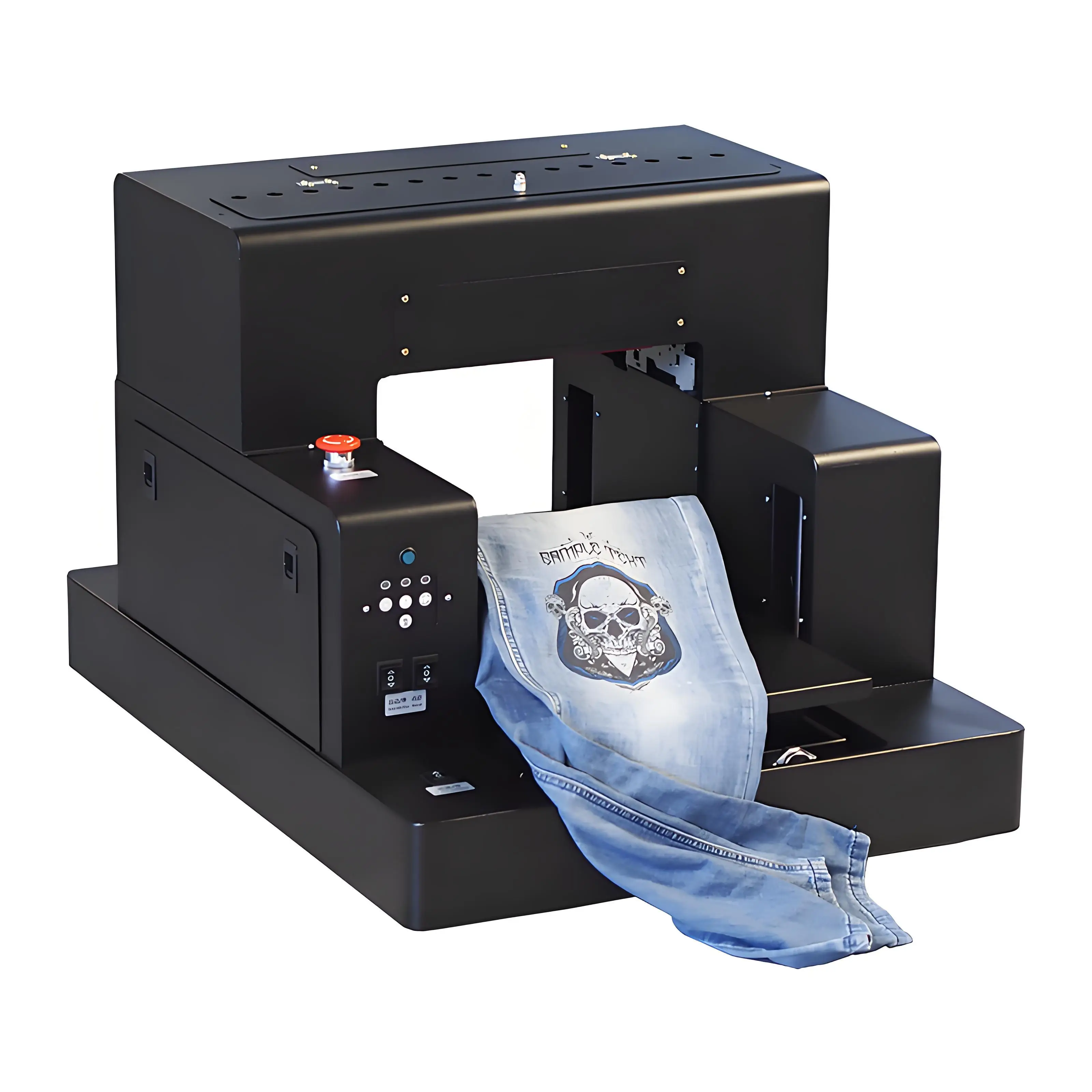
GNFEI F85G3 A3 DTG Printer
Professional Direct-to-Garment Printing Machine
Epson industrial printhead — high-precision color accuracy on dark garments
Dual-pass white + CMYK system — optimized for full-opacity dark shirt printing
White ink auto-circulation — prevents titanium dioxide sedimentation and nozzle clogging
Compatible with bulk 1.6L ink bag system — reduces per-shirt ink cost by 35%
A3 (12×16") max print area — ideal for full-front t-shirt designs
Factory-direct pricing with 12-month warranty and lifetime technical support
What is the total production cost to print one custom dark t-shirt with DTG?
The all-in production cost (COGS) to DTG print one custom dark t-shirt typically ranges from $5.00 to $7.60, broken down as: premium blank shirt ($2.50–$3.80), white + CMYK ink ($1.50–$2.50), pretreatment liquid ($0.25–$0.40), electricity and machine wear ($0.30–$0.50), and consumables/maintenance allocation ($0.20–$0.40). Actual costs depend on garment brand, design ink coverage, RIP software white density settings, and whether you use bulk or cartridge ink.
Why is printing on a dark t-shirt more expensive than a white t-shirt with DTG?
Dark garments require a mandatory white ink underbase layer printed before CMYK colors can be applied. White DTG ink contains expensive titanium dioxide (TiO₂) pigments and is consumed at 2–3x the rate of color inks, making dark shirt ink costs 3–5x higher than white shirt printing. Additionally, pretreatment is mandatory for dark garments to trigger the chemical coagulation reaction that keeps white ink opaque on the fabric surface.
How much should I charge for a custom DTG dark t-shirt to make a profit?
With a production COGS of $5.00–$7.60 per dark shirt, most small print shops price single on-demand custom shirts at $22–$32, achieving a gross margin of 65–75%. For small batch orders of 6–24 shirts (events, corporate, sports teams), a price of $17–$22 per shirt maintains healthy profitability while remaining competitive. Never price below $14 per dark shirt when accounting for all true production costs.
What blank t-shirt brands give the best DTG print quality on dark garments?
The three best DTG-optimized dark blanks are: Bella+Canvas 3001 (100% combed ringspun cotton, ultra-smooth surface, industry standard), Next Level 3600 (premium tight weave, consistent pretreatment absorption), and AS Colour 5001/5026 (streetwear-grade weight and combed cotton density). All three absorb pretreatment evenly, suppress fibrillation, and produce bright, wash-durable prints. Avoid cheap open-end cotton blanks (e.g., Gildan 5000 in dark colors) as their hairy fiber surface causes fuzzy, muted DTG results.
How many grams of pretreatment should I apply to a dark t-shirt?
For a standard adult dark t-shirt in 100% combed cotton, apply 18–22 grams of pretreatment liquid over the print area using an automatic pretreatment machine or calibrated HVLP sprayer. For heavier weight shirts (240g+) or hoodies, increase to 25–32g. Always weigh garments before and after spraying with a digital gram scale to ensure consistency. Under-pretreating causes grey, weak white ink; over-pretreating causes cracking and wash-out.
What is the ink cost per shirt for DTG printing on dark garments?
For a full-front 12×14 inch graphic on a dark shirt, typical DTG ink cost is $1.50–$2.50 per shirt. This includes the opaque white underbase layer ($1.00–$1.80) plus CMYK color inks ($0.50–$0.90). Using bulk ink bags versus individual cartridges reduces ink cost by 30–40%. Optimizing white ink density to 65–75% in your RIP software saves an additional 15–20% on white ink per shirt.
What hidden costs do DTG printers have that new business owners miss?
Common hidden DTG costs include: daily maintenance ink consumed in automatic cleaning cycles ($1.50–$4.00/day even with no shirts printed), capping station and wiper blade replacements ($100–$300/year), calibration test shirts, room humidity control equipment, RIP software licenses or subscriptions ($150–$1,200), and waste ink bottle replacements. These add an effective $0.20–$0.50 to the true cost per shirt and are often missing from beginner cost calculations.
Can I reduce my DTG production cost per dark shirt?
Yes — five proven strategies reduce per-shirt cost by 30–40%: (1) Switch to bulk 1.6L+ ink bags (saves 30–40% on ink), (2) Reduce RIP white underbase density to 65–75% opacity (saves 15–20% on white ink), (3) Buy blanks at wholesale volume pricing (saves 25–35%), (4) Calibrate pretreatment to exact gram weight using a digital scale (eliminates costly overspray), and (5) Batch similar jobs together to amortize startup cleaning costs across more shirts.
Is DTG or DTF more cost-effective for printing dark shirts?
For 100% cotton dark garments in quantities of 1–30 pieces, DTG is typically more cost-effective because there is no gang-sheet film or hot-melt powder cost. DTF becomes more cost-competitive on synthetic fabric blends (polyester, nylon) or when printing 30+ identical designs, as film sheets can be pre-printed in bulk and applied on demand. For premium retail fashion brands where soft hand feel and breathability matter, DTG on quality cotton blanks commands higher price points that justify the cost premium.
How long does it take to print one dark shirt on a DTG printer?
A dark shirt requires two print passes: white underbase (30–60 sec) plus CMYK color layer (30–60 sec), plus heat press curing (90–120 sec). Total active machine time per dark shirt is approximately 2.5–4 minutes. With pretreatment drying and garment loading/unloading time factored in, a realistic throughput for a single-operator shop is 12–18 dark shirts per hour. Industrial dual-platen machines can double this throughput using alternating platens.
Ready to Calculate Your Real DTG Production Cost?
Contact our production engineering team for a free cost-per-shirt analysis based on your specific design complexity, target garment brands, and daily production volume.